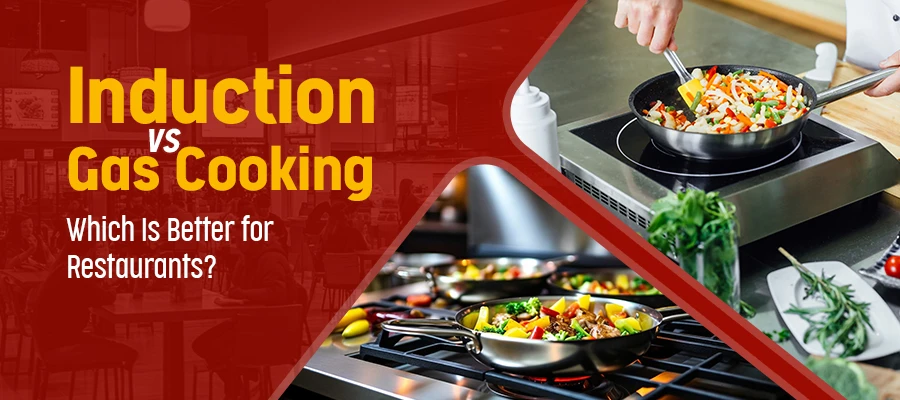
Induction vs Gas Cooking: Which is Better for Restaurants?
Mar 28, 2026This is a decision that every restaurant owner has to make at some point. Gas has been the norm for decades. Induction is rising quickly in popularity. Both have their enthusiasts. Both work. The question is, which one really makes more sense in your business?
The answer depends on your circumstances. Here is what you need to know.
The Heat Generation Difference
Gas produces heat through combustion. The flames warm up the air, the cookware, and everything in their immediate environment. It is a concept we can all understand because we can see it in action.
On the other hand, induction uses electromagnetic fields to warm up the cookware. There are no flames. There is no glowing. The surface itself does not get hot.
This basic difference informs everything else about the performance of the two.
Speed and Efficiency
Induction wins on speed. Water boils faster. Food reaches temperature quicker. Those precious minutes add up when you're serving 150 lunches in a lunch rush. A kitchen using induction technology can cook dishes 20 to 30 percent quicker than the same kitchen using gas technology.
Gas units waste a tremendous amount of energy heating the surrounding air. Efficiency is only 40 to 50 percent. Induction technology can use as much as 90 percent of its energy as actual heat. The more efficient, the lower the energy bill.
Temperature Control
Gas burners give you flame adjustment. High, medium, low. Experienced cooks work around the limitations, but precise temperature control requires constant attention.
Induction provides digital control. Set 180 degrees and the system maintains exactly that. No temperature swings. No adjusting and checking. Crucial for preparations like payasam, chocolate work, or delicate sauces where temperature precision determines success or failure.
Your idli batter steams at the same temperature every batch. Sambar simmers at exactly the right heat. Consistency improves regardless of which cook is working.
Kitchen Environment
Gas generates substantial ambient heat. In addition to this, by midday service time, the temperature in commercial kitchens is unbearable. The staff works in discomfort. The exhaust system is working at maximum capacity and still cannot keep up. This has a significant impact on the productivity and turnover of the staff.
Induction produces minimal ambient heat. The cookware heats but the surrounding air stays cooler. Kitchen temperatures drop noticeably. Staff work more comfortably. Ventilation requirements reduce. Cooler kitchens mean less fatigue and better productivity through long shifts.
Operating Costs
Gas prices fluctuate. In some regions, gas remains cheaper per unit. But efficiency matters more than raw fuel cost.
This is because induction has an efficiency rate of 90 percent, while gas has an efficiency rate of 50 percent. Therefore, you would require less energy to prepare the same quantity of food. A restaurant that uses 25,000 rupees on gas may end up saving up to 30 to 40 percent by using induction.
Equipment costs differ too. Quality induction equipment requires higher initial investment. While gas equipment is less expensive to purchase initially, it is more costly to maintain. The overall cost of ownership for five years is where the real story is.
Safety Considerations
There are open flames involved in gas cooking. Burns from hot surfaces. Fire hazards from burning out burners or gas buildup. All of these require constant attention.
With induction cooking, there is no open flame hazard. The cooking surface cools within seconds of removing cookware. No gas leaks possible. Fewer burn injuries. Lower fire risk. Better insurance rates in some cases.
Maintenance Requirements
Gas burners accumulate grease and carbon. Nozzles clog. Igniters fail. Parts need regular replacement. Cleaning takes significant time daily.
Induction surfaces are smooth and flat. Spills wipe clean easily. Few moving parts mean less can break. Maintenance requirements drop substantially. Time saved on maintenance is time available for food preparation.
Cooking Performance
Some chefs insist gas provides better control and cooking quality. The visible flame offers feedback. Wok cooking traditionally relies on the intense heat gas burners provide.
Modern high-power induction equipment handles wok cooking effectively. The adjustment period is real but manageable. Most chefs adapt within weeks and appreciate the consistency induction provides.
For many preparations, particularly South Indian cooking, induction performs identically or better than gas once cooks learn the equipment.
Infrastructure Requirements
Gas needs piping, adequate ventilation for combustion, and regular safety inspections. Installation can be complex in buildings without existing gas infrastructure.
Induction requires sufficient electrical capacity. Some older buildings need electrical upgrades. Power requirements are substantial for commercial induction equipment. This infrastructure cost can be significant.
Making Your Decision
Consider your menu first. What are you cooking? How much volume? Does your cooking style require specific heat characteristics?
Evaluate your current costs. What are you spending on gas monthly? What would equivalent induction equipment cost? How long until energy savings recover the investment?
Think about your staff. High turnover from brutal kitchen conditions costs money. Cooler, more comfortable kitchens retain staff better.
Check your infrastructure. Do you have adequate electrical capacity? Would gas installation be straightforward or complex?
Working with Industry Experts
Sabari Kitchen, with three decades manufacturing commercial kitchen equipment in Coimbatore, provides both gas and induction solutions. They understand local requirements, power infrastructure challenges, and the specific needs of different cuisines and cooking styles.
The right choice depends on your actual situation. Both technologies work. Both have appropriate applications. The best decision comes from honest assessment of your needs, not assumptions about what professional kitchens "should" use.